Showing posts with label lessonplans. Show all posts

Wednesday, 20 May 2015

Mobile & Active learning - Irregular Verbs Practice

Over the last few months I have been teaching the simple past, present perfect and the passive in several classes. I have looked for a way that students will learn and practice the irregular verbs in a fun way. The result is here and you may use it yourselves directly from the provided links. 

Quizlet Learn and Practice (There's a complete post on quizlet here). 

In this public link, the students can learn the words in 4 different learning methods (flash cards, learn, speller and test) and practice using two games: space race and scatter. They don't have to sign up in order to practice

Quizizz mobile quiz - 4 different quizes. 

On Quizizz, every teacher or student can create an online quiz which is quite fun. There are also many public quizizz on many subjects that you can copy, edit or use (watch a youtube guide). 
1. Click on the link to the quiz of your choice. 
2. Click "play".
3. Click "proceed". 
A code to the game will appear on your desktop. 
The students, on their mobile devices or in the computer lab, enter the link Join.quizizz.com and enter the code. 
Each student is tested in his own pace. I gave 30 seconds to each question but you can change it if you register and "duplicate" my quiz. 

The quizizz are:


Friday, 1 May 2015

Mr. Peabody's Apples - A story about the damage than can be caused by spreading rumours

Thanks to my colleagues at school, I bring you this lovely story by no one else than...Madonna. 


This is a touching story about an admired baseball couach, who is seen by one of his players taking an apple from a delimarket. The boy spreads the rumor that the teacher is a thief and soon enough, the whole town believes it. 
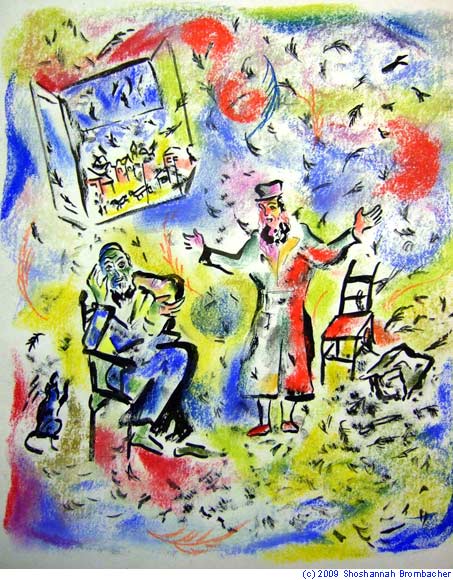
Madonna was inspired by a Hassidic story about "Lashon HaRa". The story is educating, interesting and there's a lot of room for work on vocabulary and follow up writing assignments. 

Resources:


The Narrated story on Youtube,  with the lovely pictures from the book (you can also turn on youtube "subtitles" in English). 


Two versions of the Hassidic story:

"A Pillow Full of Feathers" by Shoshannah Brombacher, who have also painted the lovely painting below.  
"Words as Feathers" by Rebbetzing Malkah.  


Sunday, 26 April 2015

Following the Neapl Earthquake - Teaching about Earhquakes and Natural Disasters

If you wish to address the subject of earhquakes and natural disasters, after the horrible disaster that happened in Nepal on April 25th, I suggest the use of "Tales of Disasters" Kit of videos and assignments. The videos and materials were created by "No Strings International" and there are many more interesting materials on their website. 

These are illusrative videos that use muppets to teach kids who live in disaster areas, what to do when something of this sort happens. The English used is not very easy, but the kids can understand the occurence from watching. It is of course good to accompany the video with guided questions. 

The videos are about the amiable villagers of a village called "Desouana Balu". 

For example, here is the video of an earthquake:


the booklet is for all 5 videos, about floods, earthquakes, landslides, tsunami and volcanos. 

Links to the rest of the videos:


Thursday, 23 April 2015

Texting Abbreviations - A Whatsapp Lesson!

This lesson was initialized as a very long ice-breaker to the subjects of digital communication. My 9th grade students were glad to discover that the text book connections (ECB publish house), presented them with texting abbreviations. They thought it was very cool.

My purpose was to open the subject with a real experience of texting, together with challenging the students in composing and writing a dialogue.

Preparation: I asked one of the students to open a Whatsapp group for the class. As I entered the lesson, I made it clear that anyone who will insert irrelevant comments will be deleted from the group. It is important to note that the activity can be done in a forum of any kind, but since we are dealing with text messaging, I wanted it to be as real as possible.

Process:
1. I asked the students what abbreviations they use in Hebrew when they text and they gave me a few examples.
2. I asked the students to take their phone (at least one per table) and I sent them a few samples found on the web:


3. the students read from each pictures in "role plays".
4. I sent the link to "texting abbreviations" website to the students and gave them the following assignment:

With a partner, make up two characters. Try to find something interesing. It could even be an astornaout and a Macdonalds' worker, the sun and the moon etc.
Compose a dialogue between the two characters, with at least 8-10 sentences. Use as much texting abbreviations as possible.
In your notebook, write the abbreviated version and the regular English version.
Copy the abbreviated version and send it to the group on whatsapp.

The students enjoyed and were very occupied. They had to find the appropriate words for their story, match suitable abbreviations and sometimes change the words in order to find abbreviations. Here is some of their early work: can you understand? :)

Two Girls Talking

Whats up girl, what are you doing? 
Great, thank you, what about you? 
I will see you tonight. It is going to be great. 
It's a date!
I'll be there. 
By the way, please call me later. 
Ok, be seeing you. 
bye. 
Great.

A Birthday Party

Whats up? Tomorrow in the weekend I celebrate my birthday party. Will you be there? Please call me.
I don't know. I'll see it over and write back.
Thank you.
By the way, can I bring my boyfriend?
As far as I know you didn't have a boyfriend.
Dan is my boyfriend.
Laugh out loud! Dan is my boyfriend and by the way you are not invited to my birthday party.

Break up over the phone...

 Sahar, I need to tell you something...if you see (this message) please call me.
why? whats up?
I don't know how to tell you.
Please tell me.
I want to break up.
But why?
I will talk to you tomorrow. I got to go.

A daughter is using her texting abbreviations to mislead her father to grant her permission for a date. 
Whats up dad? Tonight I have a date. I will be late. Is it ok?
I'm ok, It's ok you can go. How are you?
I feel great. Thank you. see you later.
Wait a second, with who are you doing your homework?
With no one.
Speak English!!!
See you, Got to go....